






Just when I thought I was finished with the history of Ashtabula County’s original 28 townships, I received a message from an individual I did not know who told me of an amazing discovery he made that changes everything!
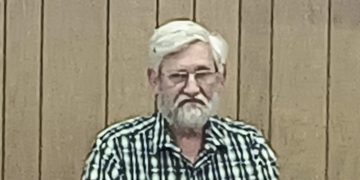
Heath White, of New London, Ohio, has been searching for more historical information about his ancestor, Samuel White, the second settler of Plymouth Township. I mentioned Samuel White in my Plymouth Township column of Sept. 11th of this year and told a little about him as well as others who came about the same time.
White learned there were original manuscripts by several Ashtabula County early settlers at the Western Reserve Historical Society on University Circle in Cleveland. What he discovered is the stuff we historians dream of.
Not only was Joel Blakeslee’s 1851 record of Ashtabula County in the society’s files, but also letters and records from Matthew Hubbard and Reverend John Hall. For the next three years, 1997 to 2000, White transcribed the documents listed below.
While White was doing a search online for anything on Plymouth Township, he came across my “Tracing Our Roots” column and left a message on my phone. It took me a while to get back to him because I had 19 messages I needed to go through. I may not answer your call and questions right away, but I save every message until I have returned the call! Most of these calls have to do with something historical and all are very important. It just takes me awhile – sometimes months!
White explained what he was looking for and shared all the resources of local history he had checked. Since he had not heard from me, he came to Blakeslee Log Cabin Days in Plymouth Township this past early fall hoping to meet someone who could help him. He met the charming and knowledgeable Judy Pallutch, whom I consider the best human history resource for Ashtabula County. Judy’s parents were members of the Ashtabula County Historical Society when they were living, and Judy has also been a lifelong member.
White knew the early accounts of some of our county’s history were lost in the courthouse fire of 1850. The courthouse was rebuilt the same year using the original walls. The first courthouse was built in 1836, but it also burned. The Ashtabula County Historical Society held their meetings in the courthouse and records and artifacts were also kept there. He learned that day at the Blakeslee Log Cabin that Joel Blakeslee, the Rev. John Hall and Matthew Hubbard and others had settlers’ memoirs kept at the Ashtabula County Historical Society, but they have been lost also.
When we talked on the phone, I was amazed and excited to hear of the original manuscripts at the Western Reserve Historical Society. All of the manuscripts PRE-DATE all our local history books. The main source for earliest history has been the mainstay, “History of Ashtabula County, Ohio, 1776-1876,” by the Williams Brothers. But the actual printing of that book was in 1878, 25 years AFTER the earliest accounts. Joel Blakeslee wrote his Ashtabula Township History in 1851, Reverend John Hall in 1856, and Matthew Hubbard in 1850.
After his initial transcribing of the handwritten manuscripts, White returned to the Western Reserve Historical Society in July of this year to copy the rest of the pages of Joel Blakeslee’s he did not have time to do earlier. He said, “I transcribed them with the assistance of AI. Every effort was made to transcribe this line by line, word by word, page by page, as written by Blakeslee. I know there are mistakes and words I was unable to decipher.”
This is an unbelievable feat and one only a dedicated historian would attempt. It is a priceless work, and I am so thankful he chose to take on the project! When I asked him how old he was to have the time and dedication to do such a project, I learned he is in his 50s. He had a successful career and was able to retire at a young age. He now enjoys researching and doing the things he loves most.
To show the vast scope of the work Heath White has done, just look at the manuscripts he has transcribed:
1850- Ashtabula Township History- letter from Matthew Hubbard to Joel Blakeslee- 18 pages
1856- Ashtabula Township History by Reverend John Hall- 171 pages
1850 circa- Ashtabula Indian Sketches by Joel Blakeslee- 28 pages
1851- Ashtabula Township History by Joel Blakeslee- 50 pages
This week, I received a comparison from White showing how the same Plymouth story was handled by several sources and showing the greater detail revealed through the new translation by White of Blakeslee’s work. He wrote, “I found one version in John Hall’s 1856 ‘History of Ashtabula’ and a second version and in the ‘Memorial to Women of the Western Reserve’ (1896). Joel Blakeslee got the story directly from Pelatiah Shepard’s wife; John Hall simply states the story ‘came to the knowledge of the writer’; and ‘Pioneer Women’ got their story from John Hall’s story. I believe this story is left out of the 1878 History of Ashtabula County book. (I checked and it is not included.)
I am including one story to show the great and colorful detail that Blakeslee uses to flesh out this incident. It is written as close to the original punctuation as possible.
From Blakeslee’s 1851 manuscript as transcribed by Heath White:
“Mrs. Shepard, wife of Capt. Pelatiah Sheward residing below the Harbor, near the Lake Shore, relates the circumstances of this Indian coming to her Cabin in 1809, in the Absence of Mr. Shepard, who was at work near the present Harbor about 1 ½ miles from her Cabin. His errand was his dog which had left him and had previously been owned by Mr. Shepard.
He demanded his dog in a Peremptory manner. Mrs. Shepard told him, the dog had not been there since morning (this was toward evening) that he went into the woods, then, and had not been at her house since.
Stanishton, with flashing eyes exclaimed, You lie. And coming towards her with his Rifle, brandishing his Tomahawk & Scalping knife, threatened to butcher her should she not deliver the dog to him immediately. To get out of his presence and save her life, she told him that she would go out and call the dog in provided he would sit down in the house til she should return.
Stanishton assented and sat down, threatening her with evil consequences should she return without the dog. This was her wise Artifice to get clear of him and flee for safety. Seeing him fairly seated, his Weapons grounded and still foaming with rage and bloody threats, she took her babe in her arms and two small children with her. She fled up the Lakeshore toward inhabitants, where Mr. Shepard was at work, whistling and calling for the dog to keep the Indian easy as she sped her way along the woods path, until happily she met Mr. Shepard, her husband, about ¾ mile from the cabin, on his return home, to whom she related the incidents that caused her to flee with her children for Protection. Shepard made up his Mind at once.
He resolved instantly, to kill the Old Scoundrel. He cut him a heavy Cudgel; determined to kill the Old Rascal. His Wife had borne insults enough from the Old Savage. With this resolve, determined to kill, Mr. Shepard went direct to his Cabin, Opened the door, sprang in with Heavy drawn Cudgel and Nerved Arm, to give the first and Death blow—But Lo!—No Stanishton was there. He had Escaped—A Blanket was found taken from a bed in the room, and lying on the ground where a hearth was to be laid, before the fire
Thus Stanishton, probably save a fractured skull and a Portion of his Brains at least, by making a Timely Exit.”
I have used Heath White’s information with his permission. I hope we can get copies of his translations in our Jefferson Historical Society so those interested can add them to their resources.


