








JEFFERSON – We live at a time when anyone can learn what’s happening anywhere in the world with a few taps on a screen.
In this world, it can be easy to think newspapers have outlived their usefulness.
After all, national and international news is available immediately around the clock. Social media can deliver breaking news almost instantly. Anyone with a smartphone can publish a photograph, video or opinion and – theoretically – reach the whole world.
However, there is one kind of news that cannot be replaced so easily: the news that happens close to home.
Community newspapers serve a fundamentally different role from national news organizations or social media. They tell residents what’s happening in their own communities, provide a record of local history and, perhaps most importantly, make local institutions and public officials answerable to the people they serve.
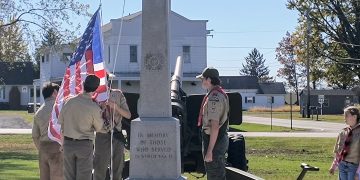
A village council meeting likely won’t make the evening news. A school board discussion may attract little attention outside the district. A new business opening, a longtime business closing, a community fundraiser or a high-school team championship may seem insignificant from a national perspective.
To the people who live there, these things matter.
“(Local journalism is) needed to keep everybody informed and to get information that people wouldn’t otherwise have,” Lara Reibold, president of the Pymatuning Area Chamber of Commerce, said.
Often enough, it’s the difference between knowing something happened and understanding what it means.
A community reporter attends the meetings most people can’t. That reporter asks questions. He or she knows the people involved, understands the history behind an issue and follows up when a story doesn’t end with the first announcement.
That work creates something social media generally can’t: continuity and depth.
A Facebook post may announce a village is considering a new ordinance. A local newspaper can explain why the ordinance is being considered, what the council has decided, how much it will cost residents and what happens next.
A school district can issue a press release celebrating an achievement. A local reporter can put that achievement in context, talk with the students and teachers involved and tell the community the story behind the accomplishment.
“(Community newspapers) are the gold standard to get factual information out from City Hall,” Conneaut City Manager Nick Sanford said. “(They are) an unbiased voice. In a world where social media- and opinion-based news are so prevalent, print media is still the gold standard. I go to (The Gazette) when I want to get the word out in Conneaut. That’s because of the work of (The Gazette) that we’re so successful in getting the word out, and other communities in Ashtabula County also have that at their disposal. The Gazette does good journalism and there are good journalists there who work hard and are unbiased in getting the word out to the community.”
When something goes wrong, local journalism becomes even more important.
A healthy community needs people willing to ask uncomfortable questions. Public officials need to know someone is paying attention. Taxpayers need to know how their money is being spent. Residents need reliable and factual information when decisions are made affecting their property, their schools, their roads and their families.
Social media has its merits and it can be a way for new information to get out quickly, but far too often it’s a case of currency over accuracy and sites such as Facebook, TikTok and X have little or no fact checking on user posts and the information presented is often one sided or taken out of context.
“Newspapers are such a valuable asset for our communities,” John Roskovics, president of Ashtabula City Council, said. “Traditionally, they keep residents informed about events in their communities, but equally important is that they can ask questions about the actions of local governments and officials. It’s sad we are losing local papers, because they can serve as a check and balance and as a tool for citizens to have a say and monitor government policy.”
That does not mean a newspaper’s job is to attack public officials or institutions. Good local journalism is not about finding fault for its own sake. It’s about accountability.
It’s also about recognizing the people and organizations that make a community worth living in.
“Local journalism is critical to keeping our community engaged and informed, providing unbiased news coverage and covering the issues that are most important to our residents,” County Commissioner J.P. Ducro IV said. “Without local professional journalistic coverage, our community would be missing a key component in staying connected.”
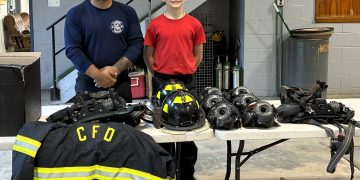
Every community has people quietly doing good work who would never attract the attention of a national publication: the volunteer who has spent 30 years helping at a local food pantry, the teacher who stays after school helping struggling students, the firefighter who answers calls at 3 a.m., the small business owner who keeps the doors open through difficult economic times, the teenager who organizes a fundraiser for a neighbor.
Those stories matter.
“What I love about our local paper is opening it and seeing people I know,” James Mayer Jr., managing partner of Your Bridge Wealth Management, said. “Of course, it’s exciting to read about a local business doing well, but I also love seeing someone’s child recognized for a great season, an achievement at school or something they’ve done for the community. The paper covers the challenges our community faces, too. But it also makes room for the good things happening here every week. With so much negativity coming at us through our phones and televisions, sitting down with the local paper reminds me how many people around us are doing things worth celebrating.”
A community newspaper is one of the places where those people become part of the public record. That public record has value far beyond the day a newspaper lands in someone’s mailbox or an article is posted online.
Years from now, someone may want to know what their town looked like, who served on council, what businesses were here, what their schools were doing and how their neighbors responded when difficult times came. Local newspapers preserve those stories.
As Philip Graham, the late publisher of The Washington Post, said, “Journalism is the first rough draft of history.”
The challenge is that producing that journalism takes people, time and resources. A reporter can’t cover a dozen meetings, interview residents, verify information, attend community events and write accurate stories simply by scrolling through social media.
The work requires showing up, and showing up is increasingly difficult as newspapers face declining advertising revenue, changing reading habits and competition for people’s limited attention.
That makes the relationship between a community and its newspaper especially important.
“As a nonprofit youth community center in rural southern Ashtabula County, the Conversation Station has been fortunate to have (The Gazette) as a source of ‘getting the word out’ about our programming, covering some of the guest speakers we have come in to interact with the youth and helping to promote our fundraising efforts, which is our main source of funding,” Gary Hunter, one of the founders of the Conversation Station, said. “All of the money raised to ‘keep the doors open’ comes from individual donations, fundraising efforts and grants we receive from local foundations. Again, The Gazette has been present to share this information with our communities, which I believe has increased those individual donations when people read and hear about the activities and service projects the young people assist with in our communities.”
Readers have a role to play by subscribing, reading, sharing legitimate local reporting and supporting the businesses that advertise in their local publications. Businesses have a role to play by recognizing that advertising in a local newspaper is not simply buying space on a page or website. It’s helping sustain an institution that serves the same community they do.
Civic organizations and public officials have a role as well. Providing timely, accurate information to local reporters helps ensure that residents understand what is happening in their community.
And perhaps most importantly, residents themselves have a role.
If something matters to a community, someone must tell the story.
Local journalism doesn’t claim to be perfect. No human institution is. Reporters make mistakes, newspapers sometimes miss stories and disagreements over coverage are inevitable.
The answer to imperfect journalism is better journalism, not no journalism.
A community without a local news source can become a community where important decisions happen without much public awareness, where rumors can fill the information vacuum and where the accomplishments and struggles of ordinary residents go largely undocumented.
“Small community newspapers are an important part of the infrastructure of rural communities, connecting residents, supporting local businesses and organizations and strengthening the community’s ability to succeed,” Greg Myers, executive director at Growth Partnership for Ashtabula County, said.
That is why community newspapers still matter. They are witnesses, watchdogs and storytellers. They are part of the civic infrastructure that allows a community to know itself.
“I think (community newspapers) are super important,” John Hutchison, director of the Kingsville Public Library, said. “First of all, it’s a way for communities to get information out to the public, and government organizations and community organizations need information to get out. Often, (community newspapers) are the only source of information people have, and if they don’t have access or the ability to get that information, you’ll have people who are uninformed. It’s a way for people to know what’s going on.
“It’s also a way for local governments to be accountable to the public. We want to have that sunshine, as we call it. We want to be able to know what is happening.
“We also get stories and great features that we can’t get anywhere else. It’s a way for us to know what our neighbors are doing and the good things they might be involved in. With sports coverage, often with students participating in organized activities, there might not be other sources covering what they do. That goes a long way.
“Kids growing up see what the high school kids or even the college kids are doing, and maybe it will shape their career paths. Just having journalists who are trained in how to provide this type of information, so it’s framed in an unbiased way, is important. These journalists work hard to make sure the information is accurate. It’s great for people to get that information. I hope (community newspapers) never go away, to be honest.”
In a time when the world has never been more connected, knowing what is happening around the corner may be more important than ever.


