






ASHTABULA AND GEAUGA COUNTIES – Rep. Sarah Fowler Arthur (R-Ashtabula) is seeking reelection to a fourth term in the Ohio House of Representatives against challenger Louis Murphy (D-Saybrook).
The 99th Ohio House District includes portions of Ashtabula and Geauga counties, including the cities of Ashtabula, Conneaut and Chardon; and the villages of Middlefield, North Kingsville, Burton and Geneva-on-the-Lake.
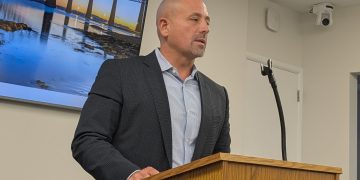
Sarah Fowler Arthur
Fowler Arthur has represented Ohio’s 99th House District since 2021 and currently chairs the House Education Committee. A lifelong northeast Ohioan, Sarah is an entrepreneur and successful small business owner who grew up working in her family’s business and agriculture.
She previously served eight years on Ohio’s State Board of Education. Sarah and her husband Isaac live on their Ashtabula County farm, where they homeschool their three children and are licensed foster parents.
Q. Why are you running for the Ohio House and why are you the best person to represent Ohio’s 99th District?
A. I am running because northeast Ohio is my home, and I want our families to be able to build their futures here. I grew up working in agriculture and my family’s small business, have been an entrepreneur and small-business owner for more than 25 years, and today my husband and I are raising our three children on our Ashtabula County farm.
I have spent the past six years representing the 99th District in Columbus and previously served eight years on the State Board of Education. I brought that experience to the Statehouse while remaining rooted in the same rural communities, small businesses, farms and families I represent.
My approach is to listen to my constituents, focus on practical solutions and make sure northeast Ohio has a strong voice in Columbus.
Q. What do you believe are the three biggest challenges facing residents of the district?
A. First is the rising cost of living. Property taxes, groceries, utilities, health care and other necessities are putting real pressure on household budgets.
Second is access to good jobs and essential services. We need an economy where young people can find careers, buy homes and raise families here, while improving access to services such as healthcare in our rural communities.
Third is preparing the next generation. Every student should have access to high-quality learning that prepares them for success, whether that path leads to college, skilled trades, business, agriculture or military service.
Q. How would you work to create and retain good-paying jobs in northeast Ohio?
A. Government should create an environment where businesses can succeed rather than picking winners and losers. That means competitive and predictable taxes, affordable and reliable energy, good infrastructure, reasonable regulations and a skilled workforce.
I have spent years working on occupational licensing reform to remove unnecessary barriers to entering the workforce and reduce licensing fees and requirements while maintaining legitimate health and safety protections. My current HB 59 continues that work by reviewing and modernizing Ohio occupational licenses.
We also need to continue building on northeast Ohio’s existing strengths in manufacturing, agriculture, energy, healthcare, and tourism with expanded career-technical education, internship and apprenticeship opportunities that connect students directly with local employers. I continue to support state policies and funding structures which expand career connections and hands-on learning in the classroom.
Q. What changes, if there are any, would you make to the state tax code?
A. Ohio’s tax structure should encourage work, investment and economic growth while being responsible with taxpayer dollars. At the state level, I have voted to significantly reduce Ohio income tax rates and simplify the tax code, and I support continuing that approach.
Property tax reform is particularly important. Taxpayers should have a meaningful voice when property taxes are imposed, and people should not be priced out of homes and farms simply because assessed values rise. I supported the House budget containing substantial property tax relief, as well as policy changes that ensure transparency and limit unvoted tax increases.
Tax policy should remain predictable, so employers feel confident building and expanding here, while avoiding penalties on the small businesses and family farms that anchor our communities. We should also continue reviewing regulations and fees that function as hidden taxes, as I am doing through the Occupational Licensure Review process.
Q. How should the House address inflation and the rising cost of living?
A. Fiscal discipline matters. When government spends responsibly and avoids unnecessary mandates, it helps reduce the cost pressures placed on taxpayers. Reducing unnecessary regulatory burdens can lower costs for businesses and ultimately consumers.
Ohio cannot control federal monetary policy, but we can control what the state government adds to the family budget. That means addressing property taxes, encouraging more affordable and reliable energy production, reducing unnecessary fees and regulations and resisting policies that unnecessarily increase the cost of housing, employment and doing business.
State government cannot simply legislate inflation away, but it can make sure it isn’t making an expensive problem worse.
Q. How would you improve access to affordable health care while controlling costs?
A. Living in a rural area, access to care is a major concern for me. My constituents often travel an hour to reach some services, including labor and delivery. I want to see more doctors, nurses and specialists available closer to home.
Part of the answer is expanding the healthcare workforce. I have worked on occupational licensing reform, including medical professional licensing, to ensure continuing education requirements and costs are commensurate with what is necessary to protect public health and safety. I also support exposing middle and high school students to healthcare careers so we can build that workforce locally.
Scope-of-practice rules should reflect professionals’ training and experience while maintaining clear, transparent titles and standards for patients. We should also use technology to streamline cumbersome insurance and administrative processes that frustrate patients and caregivers and can delay care.
Q. What should the state government’s role be in addressing the opioid crisis and mental health?
A. As Ashtabula County residents know, our community has been deeply impacted by individuals with addiction and mental health disorders. In this General Assembly, I have had the opportunity to serve on the Community Revitalization Committee, which has vetted multiple proposals for the licensing and accountability of addiction treatment facilities and personnel.
The state has an important role in ensuring that people seeking help receive safe, effective treatment from accountable providers. We should support prevention, treatment and recovery while giving law enforcement the tools needed to combat drug trafficking.
Q. What policies would you support to strengthen Ohio manufacturing and agriculture?
A. Manufacturing and agriculture need many of the same things: reliable, affordable and abundant energy, predictable taxes, dependable infrastructure, a trained workforce and regulations that protect legitimate public interests (such as clean water, air and natural resources) without making Ohio unnecessarily expensive to do business in.
Agriculture is personal to me. I grew up around agriculture, and my husband and I have a small farm today. This year Rep. David Thomas and I sponsored House Bill 733 after learning that Ohio law did not clearly recognize maple syrup as an agricultural product. The House passed our bill to provide maple producers consistent treatment and protection under Ohio law. It is currently pending in the Senate.
For manufacturing, Ohio should strengthen career-technical education and apprenticeships, maintain affordable energy and remove unnecessary barriers to expanding and hiring here. I advocated for and supported funding the recently completed Route 11 Pipeline study because local investors indicated a desire to support more local business expansion if the energy and regulatory conditions are favorable. This means more young people staying in Ashtabula County to live, work and raise their families rather than pursuing greener pastures in other states or communities.
Q. What role should the state government play in energy production, including oil, natural gas, nuclear, wind and solar power?
A. Ohio needs abundant, reliable and affordable energy. I support allowing diverse forms of energy production while focusing state policy on reliability, affordability, property rights and responsible stewardship rather than having government pick winners and losers.
I supported House Bill 15 because Ohio needs additional generation, greater competition and transparency and a grid capable of supporting families and future economic growth. While dozens of new energy projects have since begun the permitting process, it takes time to develop the infrastructure and ensure competitively priced, abundant supply.
Q. How would you protect the Great Lakes and northeast Ohio’s natural resources while encouraging economic development?
A. Lake Erie, our waterways, forests and farmland are natural treasures and major economic assets. Protecting them and growing our economy should not be viewed as mutually exclusive goals.
I favor policies that focus on measurable environmental outcomes and cooperation with farmers, businesses and local governments. Redeveloping brownfields is a good example: putting previously developed or contaminated land back into productive use can create jobs while reducing pressure to develop farms and undeveloped land. Ohio’s Brownfield Remediation Program currently provides state resources for exactly that kind of redevelopment.
Q. What committee assignments would you seek and why would they benefit this district?
A. I am very pleased with my current committee assignments as they each focus on areas that I feel are particularly important to me and the 99th District: the House committees for Education, Local Government, Children & Human Services and Community Revitalization. I would seek to continue working in the areas of education, foster care, government accountability, transparency, and workforce and economic development.
As Chair of the House Education Committee, I have focused on ensuring students have high-quality educational opportunities that prepare them with practical life skills and the academic background to pursue college, skilled trades, business, agriculture, homemaking or military service. I have emphasized literacy and foundational learning, career-technical opportunities, parental choice in education, transparency and reducing unnecessary regulatory burdens on teachers.
Since our family’s foster and adoption journey began, I have seen too many children getting lost in the bureaucracy. We need to improve accountability, streamline training and data transfer, ensure kids are getting the care they need and prioritize foster youth being in a stable home sooner. I am currently working on these and related issues on the Children & Human Services Committee.
I also continue to serve on the Local Government Committee which considers the tools townships, commissioners and board members have available to address the needs of our local communities. We vet policies ranging from tax policy to economic development, nuisance regulations to septic systems and beyond! I appreciate the wide range of local government structures we have in Ohio and strive to take a thoughtful approach to every policy proposal.
Q. What issue do you believe receives too little attention in Columbus?
A. The cumulative impact of government regulation receives too little attention. A license, fee, continuing-education requirement or mandate may look small by itself, but together they can make it much harder and more expensive to enter a profession, start a business, operate a farm, or hire employees.
That is why occupational licensing reform has been an ongoing priority for me. The goal is not simply deregulation; it is making sure requirements are actually commensurate with what is necessary to protect public health and safety.
Ohio’s statutory review process examines occupational boards and licenses specifically to identify unnecessary workforce barriers while preserving their legitimate purposes. Every unnecessary cost the government removes is one less obstacle between an Ohioan and productive work.
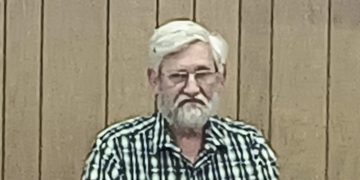
Louis Murphy
Murphy is a lifelong Ashtabula resident, Lakeside High School teacher and Edgewood High School coach, raised by a public school teacher who served at Jefferson for nearly 40 years. He holds a Master of Environmental Policy and Global Sustainable Development from Lehigh University.
Q. Why are you running for the Ohio House and why are you the best person to represent Ohio’s 99th District?
A. I’m running for office because our state and district have formed a habit of electing representatives who are not accountable to their voters. I’d like to see a northeast Ohio where families feel at peace knowing there are jobs and education here, for themselves and future generations.
Q. What do you believe are the three biggest challenges facing residents of the district?
A. The rising cost of living and burdensome local property taxes driven by the state’s cuts to the Local Government Fund, the need for practical economic revitalization, particularly the cleanup and redevelopment of industrial sites and ensuring our public schools are fully and fairly funded so they can provide high-quality education and career-tech opportunities without being micromanaged by Columbus.
Q. How would you work to create and retain good-paying jobs in northeast Ohio?
A. I will prioritize funding for brownfield remediation to transform abandoned industrial sites into prime locations for new businesses. Furthermore, I will aggressively work to expand reliable broadband access to every home and farm, which is no longer a luxury but a necessity for modern commerce and agriculture. Finally, we need to ensure our career-technical centers are fully funded to provide the skilled workforce that incoming manufacturers require.
Q. What changes, if there are any, would you make to the state tax code?
A. We must restore the Local Government Fund. Over the past decade, the state has slashed revenue sharing with our municipalities, forcing our townships and cities to continuously rely on local property tax levies just to fund basic services like police, fire and EMS. Reversing these cuts is the most direct way to relieve the local tax burden on homeowners and farmers in the 99th District.
Q. How should the House address inflation and the rising cost of living?
A. While inflation is largely a national issue, the state can help by reducing the financial pressures on working families. This means protecting the Local Government Fund to prevent local property tax spikes, lowering the cost of healthcare through transparency measures and investing in affordable housing and childcare initiatives. We must also scrutinize utility rate hikes to ensure Ohioans aren’t being overcharged to cover the costs of political scandals like House Bill 6.
Secondly, utility access within our district’s rural infrastructure plays a large role in the economic success of residents. Nearly a million Ohioans lack access to high-speed broadband Internet. By expanding access, we can connect seniors, students and telehealth workers while creating a competitive marketplace, lowering residents’ bills.
By upgrading our utility infrastructure and burying power lines we can insure ourselves against widespread power outages while increasing the appeal of our high-traffic, commercial areas.
How would you improve access to affordable health care while controlling costs?
I’d like to curb the principal cost of healthcare by supporting measures that increase transparency in medical billing and prescription drug pricing, specifically reining in the practices of pharmacy benefit managers that artificially inflate costs.
We also need to protect and expand access to rural healthcare facilities and telehealth services, so residents in Ashtabula and Geauga counties don’t have to travel long distances for specialized, or even basic care.
Q. What should the state government’s role be in addressing the opioid crisis and mental health?
A. The state must heavily invest in both treatment and prevention. We need to expand state funding for local mental health boards, increase the number of available treatment beds and support recovery programs.
We must also ensure our first responders are adequately equipped and funded to handle the immediate crises on the ground. While we don’t have all the science on the most effective ways to combat these issues, data has shown that making these investments significantly reduces their rate.
Q. What policies would you support to strengthen Ohio manufacturing and agriculture?
A. Regarding agriculture, we must protect farmland from overdevelopment and ensure farmers have access to the latest precision agriculture technologies to maximize yields while protecting water quality.
For manufacturing, we need a robust pipeline of skilled labor through our public schools and career-technical centers. By tailoring our educational programs with the specific needs of local industries, we can make northeast Ohio highly attractive to new manufacturing investments.
Q. What role should the state government play in energy production, including oil, natural gas, nuclear, wind and solar power?
A. AEP anticipates demand for energy in Ohio will nearly triple over the next decade, largely due to expected data center projects. The state government should be allowed to regulate energy prices to avoid companies from functionally price-gouging their customers, which is something we’re already seeing as the average Ohio power bill has increased by 22 percent over the past year.
The state government should not, however, be allowed to prohibit the construction employment of renewable energy sources, commercially or residentially, except for nuclear energy.
Q. How would you protect the Great Lakes and northeast Ohio’s natural resources while encouraging economic development?
A. Lake Erie is our greatest economic and environmental asset. When it comes to our district, we have two powerful lakefront communities that come to mind – the development of which I’m generally in favor.
We’re already seeing developer agreements that include investment in shoreline erosion prevention, which is something we should encourage and consider mandating for future developments located near identified environmental protection zones.
I would do what’s in my power to encourage continued state and federal investments in the H2Ohio program to reduce agricultural runoff and prevent harmful algal blooms.
We can encourage economic development by cleaning up industrial sites near our waterways, creating usable commercial and industrial space while removing environmental hazards.
Q. What committee assignments would you seek and why would they benefit this district?
A. I would seek assignments on the Primary and Secondary Education Committee and the Agriculture and Conservation Committee.
As a teacher, I have firsthand experience with how state policies impact our classrooms and I want to advocate for the Fair School Funding Plan. Furthermore, agriculture and the health of Lake Erie are the bedrock of our local economy; I want to ensure those interests are protected in Columbus.
Q. What issue do you believe receives too little attention in Columbus?
A. The slow erosion of home rule and the underfunding of our local governments. Columbus spends too much time debating divisive, ideological bills while ignoring the fact that our local townships and cities are struggling to pave roads and fund emergency services. We need to refocus the state legislature on the practical realities of local governance.


