







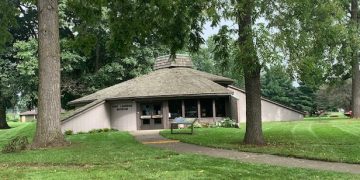


ORWELL – Grand Valley Local Schools is educating fewer students than it did a decade ago, but the district’s financial pressures have not declined with enrollment.
Superintendent Dr. William Nye said the district has about 830 students, roughly the same as the previous two years, compared with a peak enrollment of about 1,450. Enrollment has been declining for more than a decade, and the district projects it will spend about $400,000 more than it receives next year.
“I need to cut more,” Nye said, adding that the district’s general fund balance of more than $5 million is intended to help it remain financially viable in the years ahead.
Nye’s concerns reflect a broader debate over how Ohio funds public education, the role of local property taxes and whether districts can control costs without compromising services.
As part of an effort to explain the system to residents, local school districts have been sharing information through a public education campaign titled “Understanding School Funding: Dollars, Sense, and the Facts That Fund Our Classrooms.”
Nye said this information is not intended to be an endorsement or criticism of any candidate for office but is an effort to help voters make informed choices.
The campaign explains that public schools receive money from several sources: local property taxes and, in some districts, income taxes; state funding; and federal grants directed toward specific programs and student needs. The proportions vary by district.
Ohio Rep. David Thomas, a Republican who represents the district, argues controlling spending must be part of the discussion alongside school funding.
“The district can always reduce spending more,” Thomas said.
He suggested districts explore shared bus services, shifting teachers among assignments and reducing administrative overhead. He also said districts should consider different models of delivering education and greater sharing of administrative and support functions, if voters support those changes.
Thomas said he believes public school spending has grown too much, citing state budget figures showing more than $17 billion in school spending in the 2025 budget, compared with $14 billion in the 2021 budget. Those figures encompass a broader measure of spending than state foundation aid alone.
A separate analysis published by the Ohio Education Policy Institute in March 2024 examined state foundation formula aid and tangible personal property replacement payments to traditional public schools and joint vocational school districts.
Those payments rose from about $7.08 billion in fiscal year 2011 to $8.49 billion in fiscal year 2024, an increase of about 20 percent before accounting for inflation. The institute calculated that inflation over the period was about 39 percent, meaning the 2024 total had less purchasing power than the 2011 amount.
The two sets of figures measure different categories of education spending and should not be read as direct comparisons.
Thomas also questions the state’s Fair School Funding Plan, arguing that tying allocations to district spending risks rewarding higher costs rather than better results. He favors an approach that considers both per-pupil spending and educational outcomes.
He said Grand Valley would have been among the districts that lost the most under the plan because it would have changed the district’s guaranteed state revenue. Thomas said the district’s state funding has remained roughly flat for about a decade even as enrollment has declined.
Nye, meanwhile, said the district faces significant costs associated with student needs and support services. These services include occupational, speech and physical therapy, psychological services and, in some cases, one-on-one aides.
Nye also said schools face compliance requirements that can carry costs without additional funding. He cited Reading Improvement and Monitoring Plans (RIMPs), which require schools to provide interventions for certain students and document their progress.
The debate over spending also extends to district reserves. Thomas said school districts statewide held about $10 billion in reserves in 2025 and argued that some districts maintain balances well above what they need to operate. He supports greater scrutiny of local government budgets and property-tax revenues.
Nye said Grand Valley’s balance should be considered in the context of its financial forecast, rather than treated as money available to spend freely. The district’s projected deficit, he said, makes the balance important to its long-term financial survival.
Property-tax policy is another part of the debate. Ohio’s House Bill 920, enacted in 1976, limits the growth in revenue generated by existing voted property-tax levies as property values rise, through adjustments to effective tax rates. School districts also operate under a 20-mill floor, which helps establish a minimum level of local property-tax support.
Two measures that took effect in March 2026, House Bills 129 and 186, changed aspects of school property-tax calculations. Thomas said the measures are intended to limit increases in property-tax revenue that occur without another vote by taxpayers, rather than reduce existing school funding outright. The laws’ effects depend on the district’s circumstances and the applicable tax calculations.
Nye said declining enrollment creates difficult choices for districts such as Grand Valley, which must manage staffing and services as the number of students changes. He also noted that special education and other support needs can create substantial costs regardless of overall enrollment.
Thomas said districts should be willing to reconsider how they provide services and share administrative responsibilities before asking taxpayers for more money. Nye said the district’s financial challenges will require continued attention as costs and enrollment change.
“There will be a financial crunch down the road,” Nye said.
For Grand Valley, the immediate challenge is balancing its budget while planning for a smaller student population and maintaining the services its students need. The larger debate is whether Ohio’s school funding system should provide more state support, place greater emphasis on controlling costs, or find a way to do both.


