




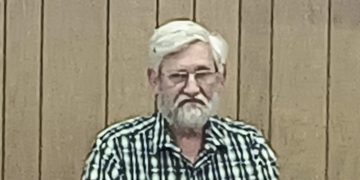
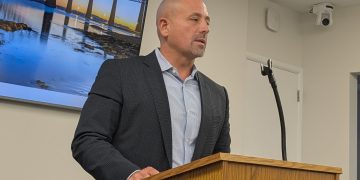




JEFFERSON – Judge Albert Camplese and Judge Harold E. Specht would both love to continuing serving the residents of Ashtabula County from the bench as a judge in the Ashtabula County Court of Common Pleas.
The candidates provided answers to a questionnaire that highlight where they might be of the same mind, but also where they differ.
In Part 2 of a two-part story, Camplese (D) and Specht (R) discuss the policies they’d like to implement the day they take office; what they most look forward to when they take office; and whether or not a county drug court should be reestablished.
The candidates’ unedited answers to the questions they were asked include:
Q: What policies would you implement on day one?
Specht: Judges should be careful about describing their role in terms of implementing political “policies.” A Common Pleas judge’s responsibility is to administer the court effectively and apply the law.
From day one, my focus would be on an efficient docket, timely resolution of cases, responsible use of taxpayer resources, appropriate use of technology and ensuring that attorneys, litigants, victims, witnesses, jurors and law enforcement are treated professionally.
I would also examine existing court programs and practices to determine what is working, what can be improved and where resources can be used more effectively.
My objective would be a courtroom that is fair, firm, efficient and accountable to the people it serves.
Camplese: I would begin the work necessary to determine how best to reestablish a certified Felony Drug Court. That cannot responsibly be accomplished by simply announcing that a drug court exists. It requires planning, qualified treatment providers, probation and case-management resources, participation by justice-system partners, appropriate eligibility standards, sustainable funding and certification by the Supreme Court of Ohio.
I would not be starting that work from scratch. During my years on the bench, I have developed working relationships with service and treatment providers, law enforcement personnel, state agencies and others involved in our justice system. I have also worked with state, federal and private funding sources to secure outside resources for court programs. Those relationships and that experience would be valuable in assembling the people and resources necessary to develop a sustainable Felony Drug Court.
I would review our use of T-CAP and other lawful community-based alternatives to determine whether they are being used appropriately and effectively. I would also begin discussions with the judges, prosecutor, defense bar, probation, sheriff, treatment providers and county officials concerning how the courts and the new jail should function together.
I have learned during 33 years on the bench that lasting improvements rarely come from slogans. They come from identifying a problem, bringing the necessary people together, finding the resources and doing the work required to build something that lasts.
Q: What do you most look forward to about taking office or being reelected?
Specht: I look forward to continuing my service to the people of Ashtabula County at the Common Pleas level.
Serving as a judge is an enormous responsibility. People come before the court during some of the most consequential moments of their lives. Victims expect justice. Defendants are entitled to due process. Families want answers. The public expects safety and accountability.
I look forward to bringing the judicial experience I have gained on the Eastern County Court bench to the Common Pleas Court and continuing to serve this county with consistency, fairness, and respect for the law.
Camplese: What I would most look forward to is the opportunity to continue to apply what I have learned during 33 years as a full-time judge to the particular responsibilities of the General Division.
My present position is unusual in its breadth. I am simultaneously the Probate Judge and Juvenile Judge and, by virtue of those positions, also perform the responsibilities of clerk for those courts. I am responsible for 39 employees, two facilities, budgets and programs, a juvenile probation department and a combined Probate and Juvenile caseload that in recent years has involved approximately 2,400 to 2,700 cases annually. I am also responsible for securing and administering the detention resources necessary for our juvenile population and for obtaining approximately $1.3 million to $1.5 million annually in grant funding and other outside resources necessary to operate our Family Resource Center and related programs.
Those responsibilities have required me, throughout my common pleas court career, to be both a judge and a court administrator. They have also required me to develop relationships with treatment and service providers, law enforcement, state agencies, community organizations and public and private funding sources.
I would look forward to focusing that accumulated judicial and administrative experience on the General Division’s civil and felony docket and on some of the larger issues confronting our criminal justice system.
Q: Do you believe the county should restart a specialized felony drug court, and if so, what changes or resources would you consider necessary to make such a docket effective and sustainable? What role, if any, should the judge play in determining whether the docket is restarted?
Specht: I have a unique perspective on this issue because I have experience with specialized dockets from both sides of the bench.
During my years as a prosecutor, I was a member of the Treatment Team for the Felony Drug Court. That experience gave me firsthand knowledge of how a successful specialized docket operates, the cooperation it requires and the importance of balancing treatment with accountability as well as where improvements can be made.
Today, as Judge of the Eastern County Court, I oversee our Veterans Court Program, a specialized docket that I established and that has been certified by the Supreme Court of Ohio. That experience has only strengthened my belief that specialized dockets can be effective when they are properly structured, adequately supported and focused on measurable results.
In Veterans Court, we hold our participants to the highest standards and we expect results. Participation is not a free pass and it is not an excuse for criminal behavior. Participants are expected to follow the rules, appear before the court, comply with treatment and testing requirements, accept responsibility for their actions and demonstrate that they are committed to changing their lives. I have already received the approval from the Ohio Supreme Court to bring my Veterans Court Program to the Common Pleas Court if I am successful this election.
That same philosophy would guide my approach to a felony drug court.
Before restarting the program, I would want to examine what worked previously, what did not, why the prior program ended and what resources would be necessary to make a new program sustainable. That includes treatment availability, probation and court staffing, funding, eligibility standards, testing, supervision and measurable outcomes.
The judge must play an active leadership role in a specialized docket, but no judge can make one successful alone. It requires a committed team involving the court, prosecutor, defense counsel, probation, treatment providers, law enforcement and community partners.
I have seen firsthand what specialized dockets can accomplish. When we combine treatment with strict accountability and high expectations, we can give appropriate participants an opportunity to change their lives while still keeping public safety as our highest priority.
Camplese: Yes, I believe Ashtabula County should work to reestablish a certified Felony Drug Court.
I established the Family Drug Court, our county’s oldest specialized docket. My support for specialized dockets is rooted in practical experience. I have seen how treatment, close judicial supervision and accountability can work successfully together.
A successful Felony Drug Court cannot simply be a way to avoid jail. Participants must be carefully selected. The program needs meaningful treatment, regular testing, close probation and case-management supervision, clear expectations, graduated responses to noncompliance and regular appearances before the judge. Public safety must remain central to eligibility and decision-making.
It also needs sustainable resources. That means qualified treatment providers, probation and case-management capacity, reliable testing, data collection and cooperation among the court, prosecutor, defense counsel, law enforcement and treatment community. I would also pursue available state and federal funding opportunities, including appropriate SAMHSA treatment-court funding, rather than unnecessarily placing the entire cost on county taxpayers.
The new jail makes this issue even more important. Jail beds are expensive resources. Incarcerated individuals also create medical, mental health and other costs that the county must bear. Appropriate offenders who can safely be treated and closely supervised in the community should have that option available. That can preserve jail capacity for people who need to be incarcerated while making responsible use of taxpayer dollars.
The judge’s role is critical. In Ohio, a specialized-docket judge is not simply someone who receives a report after treatment occurs. The judge is part of the treatment-court structure, chairs treatment-team meetings and interacts regularly with participants. The judge is also responsible for maintaining the independence necessary to make appropriate judicial decisions.
But, the judge cannot successfully operate a drug court alone. A sustainable specialized docket requires a committed team and cooperation among justice system and treatment partners. The question should not be whether we are “tough” or “soft” on crime. The question should be whether what we are doing works – whether it protects the public, holds offenders accountable, reduces repeated involvement with the criminal justice system and uses taxpayer resources responsibly.


