










CONNEAUT – Data centers have been discussed and debated in Conneaut for most of 2026.
Growth Partnership for Ashtabula County and M2 Development Solutions have made presentations that addressed the reasons Conneaut is a good location to build a data center. They’ve attempted to address concerns.
A large number of residents, on the other hand, have attended multiple city council meetings attempting to convince councilmembers that building a data center within the city is a bad idea.
The debate will reach its culmination on Tuesday, Nov. 3, when a citizen-led ballot initiative will be decided by voters in the general election.
Voters will decide whether the charter of the City of Conneaut will be amended to add Article XVI. A “yes” vote will prohibit the construction of a data center greater than 25 megawatts.
The citizens who succeeded in collecting the signatures for the petition to get the issue on the ballot wanted whether or a not a data center is built in the city to be decided by the residents.
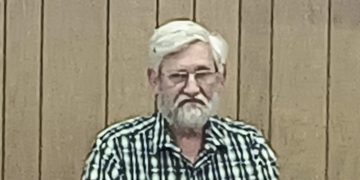
“Conneaut citizens must have a voice on the future of data centers in our city,” concerned citizen and petition organizer Joel Specht said. “This charter amendment will hopefully stop all companies wishing to build AI hyper-scale data centers in Conneaut, because 25 megawatt-sized facilities are not profitable enough.”
“Once a company gets its foot in the door, the sky is the limit, and they creep by buying up and expanding to adjoining properties,” Specht continued. “It’s not enough to monitor or put limitations on giant data centers – we don’t want them at all. If citizens don’t want massive buildout of hyper-scale data centers in Conneaut and the surrounding area: Vote Yes on 10.”
Limiting the size of data centers allowed to be built protects the city’s natural resources, Issue 10 supporters say.
“Limiting the size of data centers protects the health of Conneaut Creek, Lake Erie, farmlands, wildlife, residents and the air we breathe,” Specht said. “A 25-megawatt or smaller facility is about 100,000-250,000 square feet, uses less water and needs about as much power as a Walmart Supercenter. Hospitals, schools, governments, etc., need small- to medium-sized data centers to run their operations in the digital age.
“Compare that to a 500-megawatt facility, which is about the size of a regional airport and uses as much energy as 125,000 households,” Specht continued. “It would mean much less irreversible destruction of our community to limit peak energy use to 25 megawatts.”
Supporters of the ballot initiative don’t believe limiting data centers will affect further industrial development.
“The charter amendment specifically names only data centers, no other industries,” Specht said. “As proof that this is not scaring away other industrial development, Graphite One is coming to Conneaut, creating potentially 150 new jobs.”
“Data centers are a very different industry than what we’re used to in Conneaut, and if anything, this charter amendment will signal to others that we take care of our own in Conneaut, and if an industry isn’t going to be a good business partner and benefit the whole community, they can move along,” Specht continued. “We have already experienced too much industry that has left us with toxic sites and crumbling infrastructure. All that becomes a social and economic mess for us to clean up.”
Specht notes the people on both sides want what they believe is best for the city.
“Our common ground is that both sides want what is best for the city,” Specht said. “The opposition to data centers is not partisan. In my experience collecting signatures throughout our county since March – for both the state and local initiatives to limit data centers to 25-megawatt – citizens against data centers outnumber proponents by a lot and political affiliation has nothing to do with it. Opponents feel that the risks are too high and this industry is too new and extractive to be trusted with the long-term consequences to our community.”
The opponents to data centers say they don’t want to stop industrial development in the city, they simply want to limit data centers.
“The members of Conneaut Community Water Air Land & Life (CCWALL) are not against new businesses coming to this city,” Specht said. “We are also not pro data centers. There are two groups opposing this measure, one who thinks it goes too far, and one who thinks it doesn’t go far enough. Our expectations are that any business will be good neighbors of our citizens and conservationists of our natural resources.”
“We want a healthy balance between the growth of our city and the protection of what makes Conneaut special,” Specht continued. “Once data centers have a foot in the door, they will take over, but we also need to build the city’s tax base to fix roads, build infrastructure and create recreational and community spaces that will engage citizens and draw visitors and new residents.”
In an FAQ on its webpage, Growth Partnership for Ashtabula County addressed placing moratoriums on data centers. Though the ballot initiative is not a moratorium on data centers, the intention is the same.
The FAQ states there can be disadvantages to going to such lengths as the ballot initiative or a moratorium.
“This is one of the most underappreciated downstream consequences of a moratorium,” the FAQ states, “Data centers are anchor tenants for broader infrastructure investment and blocking them can stall or eliminate upgrades that would have benefited the entire county and region.”
According to the FAQ, those disadvantages include:
• Electric Infrastructure – Hyperscale data centers routinely require substation upgrades, new transmission capacity, and grid modernization that utilities wouldn’t otherwise fund on the community’s timeline. These upgrades, once built, serve existing residential and commercial customers, support future industrial attraction, and improve grid resilience broadly. A data center moratorium removes the demand signal that justifies that capital investment.
• Natural Gas Infrastructure – This is directly relevant to communities in Ashtabula County. Data center developers frequently require firm natural gas supply for primary power generation in the opportunities that we’re working on. That demand can be the economic justification for extending or upgrading pipeline laterals – exactly the dynamic the Risberg Line project represents. Without an anchor tenant generating sufficient demand, the financial case for that infrastructure investment weakens considerably or collapses entirely.
• Water and Sewer – Data centers requiring municipal water for cooling can drive capacity expansions in water treatment and distribution systems that benefit surrounding industrial and commercial users. The same is true on the wastewater side. These are expensive upgrades that communities often can’t justify on organic growth alone.
• Broadband and Fiber – Data center development almost always requires high-capacity fiber infrastructure. The conduit, rights-of-way, and network investments made to serve a data center frequently create opportunities for communities to negotiate dark fiber access, expanded broadband service areas, and improved connectivity for existing businesses and residents – benefits that outlast any single tenant.
• Road and Access Infrastructure – Large projects trigger traffic impact studies and often generate developer contributions toward road improvements, intersection upgrades, and access infrastructure. These improvements serve the broader corridor long after construction is complete.
• The Compounding Effect – Perhaps most importantly, infrastructure begets infrastructure. A natural gas extension makes the next industrial prospect more viable. A substation upgrade makes the next manufacturer more interested. A fiber build opens broadband possibilities that attract different categories of business. Data centers sitting at the beginning of that chain mean a moratorium doesn’t just block one project – it can interrupt an entire sequence of infrastructure investments that compound over years.
The FAQ states that the opportunity to build data centers goes hand-in-hand with the opportunity to improve infrastructure.
“For Ashtabula County specifically, where the port, the industrial land inventory, and projects like the Risberg Line are all interconnected parts of a larger infrastructure strategy, this compounding risk is very real” the FAQ states. “The data center opportunity and the infrastructure development opportunity aren’t separate – they’re the same opportunity.”


